El Escorial is a small town about 56 km (34.5 miles) northwest of Madrid, Spain, going by bus, takes about an hour.

Ok, I just discover that we’re not going to El Escorial, but rather San Lorenzo de El Escorial, a neighboring town. A very neighboring town.

San Lorenzo de El Escorial is a small town about 58 km (36 miles) northwest of Madrid, Spain, in the Guadarrama mountains. Meet at 10 a.m. at the metro stop Sol and head to Moncloa Station, which is an interchange for metro trains, city buses and intercity buses in the north-west area of the Community of Madrid. From there, the bus ride is a little over an hour, but it’s a pretty scenic trip. As we chat, my eyes keep flickering to the windows behind her and I admire the landscape. As you can see on the first map above, once you get out of the city of Madrid, it gets pretty green.
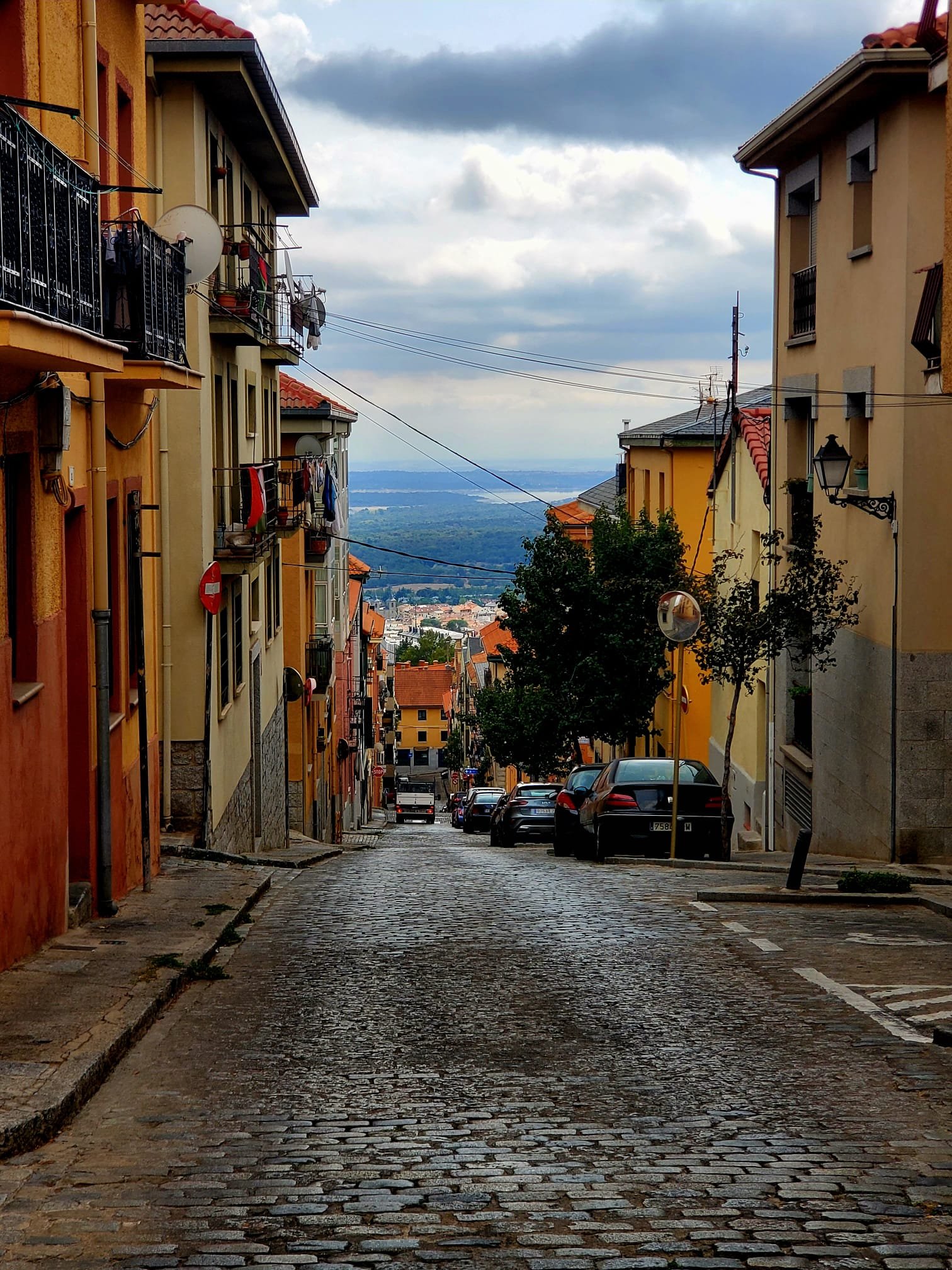
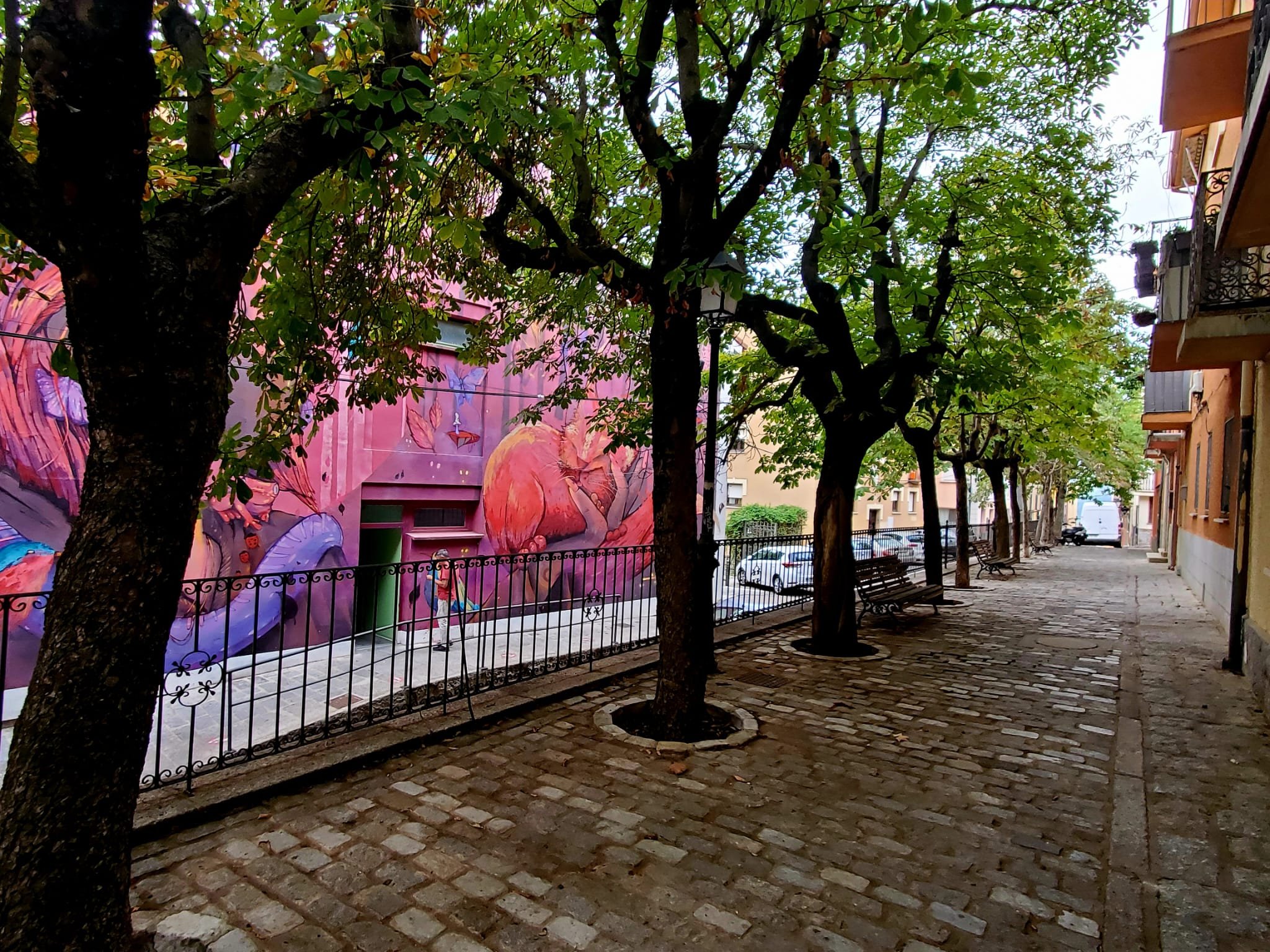
Before I know it, we are hopping off at the Estación de Autobuses SLDe de El Escorial (SLDe El Escorial Bus Station). I’m immediately struck by how cute the town is. We wander through the cobblestone streets for a bit before finding a café and having a drink and a bite before going to our tour.
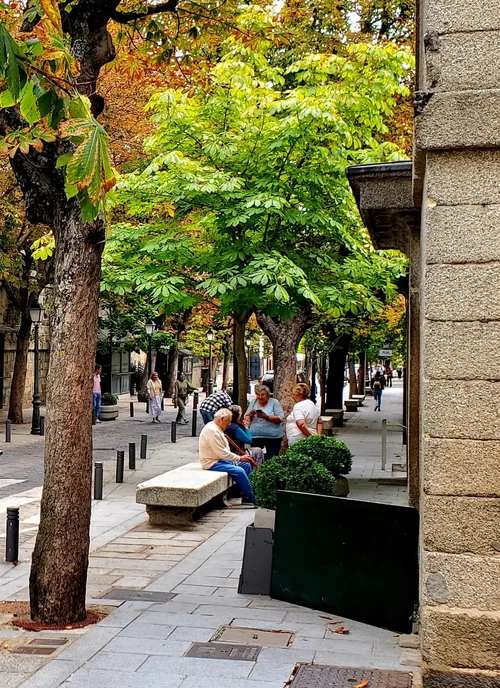
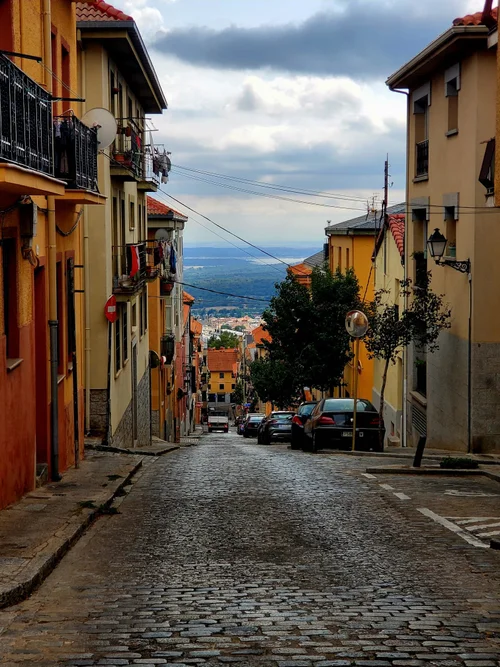
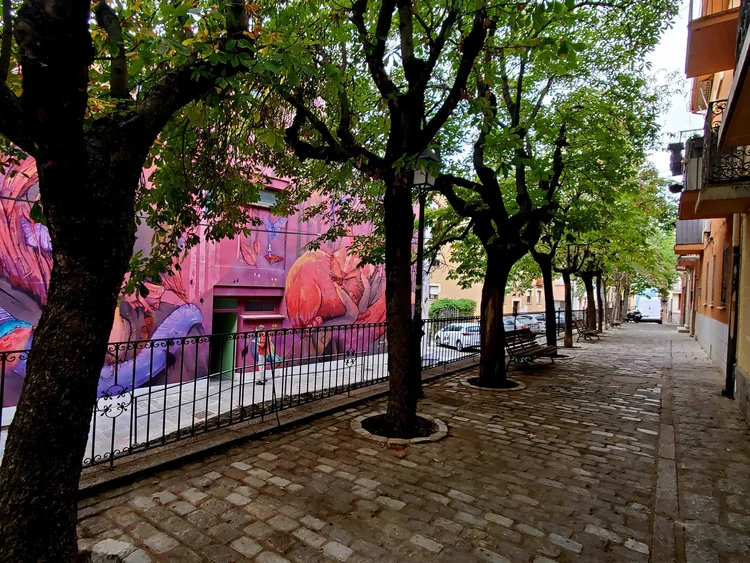
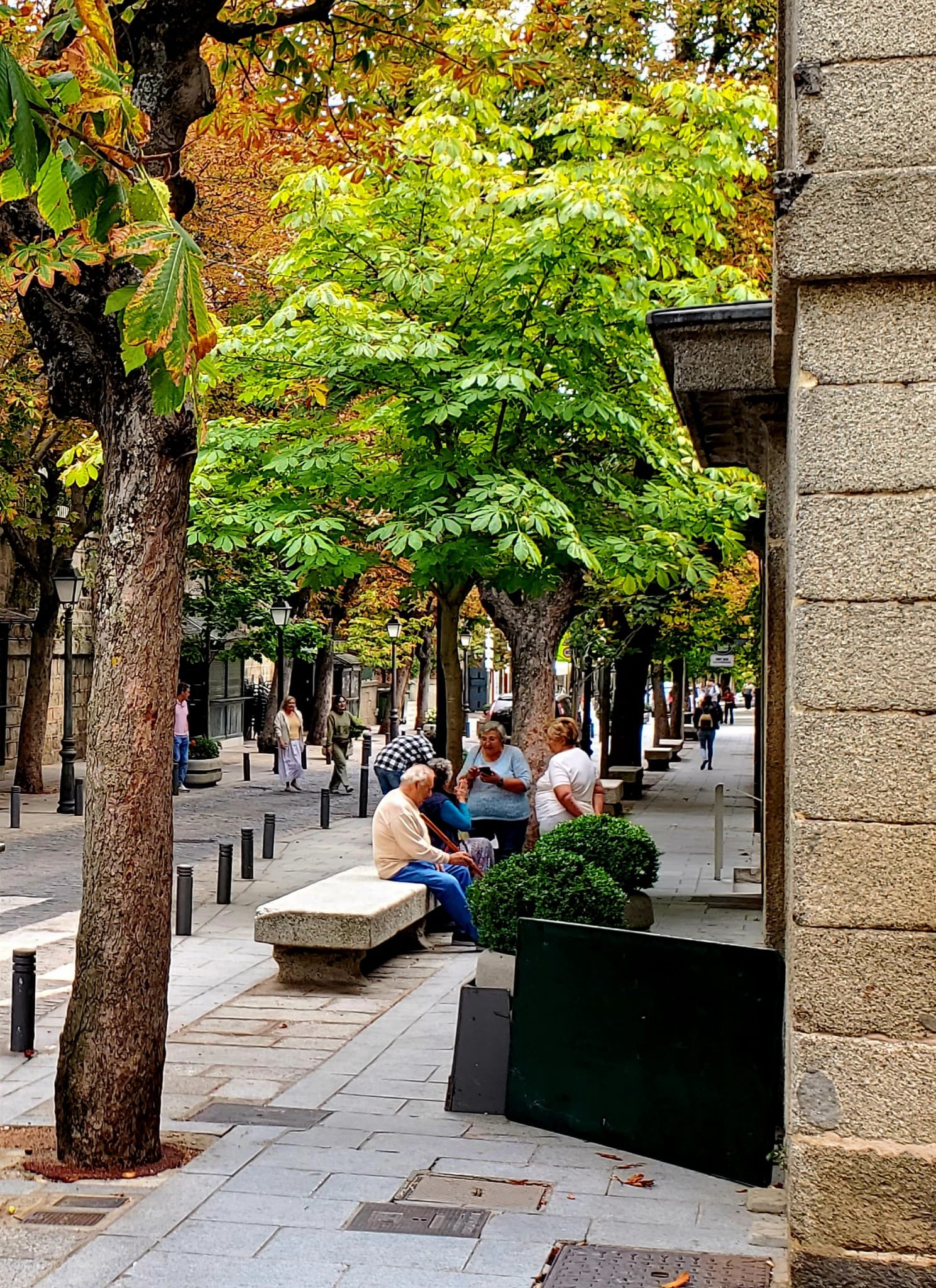
Once we’re sufficiently suffonsified, we head for the monastery.
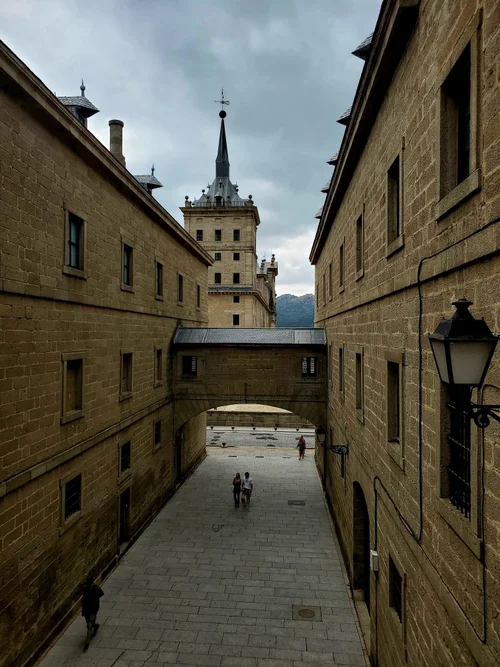
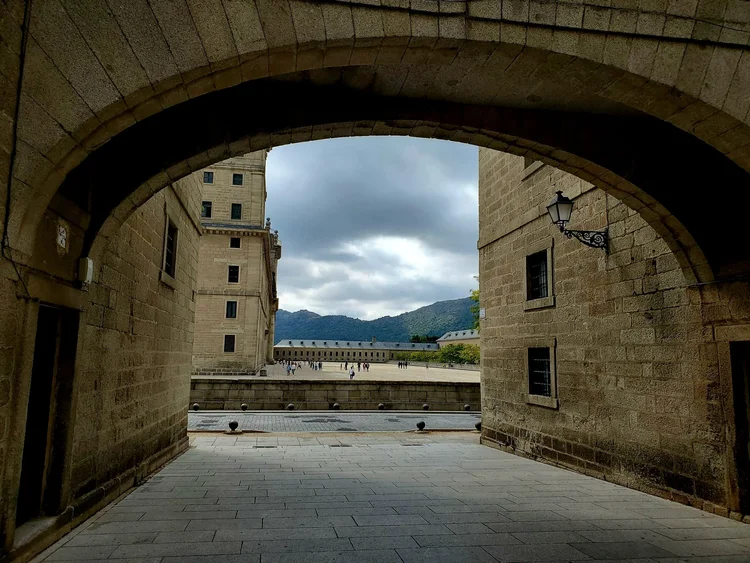
The Real Monasterio de San Lorenzo de El Escorial (Royal Monastery of San Lorenzo de El Escorial) was built in the late 16th century by King Philip II (not literally, of course) and is the largest Renaissance building in the world. And it’s not just a monastery, it also contains a royal palace, royal tombs, basilica, museum, school, hospital, and library.
On November 2, 1984 the building and surroundings were declared a World Heritage Site UNESCO.
As we approach on this overcast morning, I am already in awe.
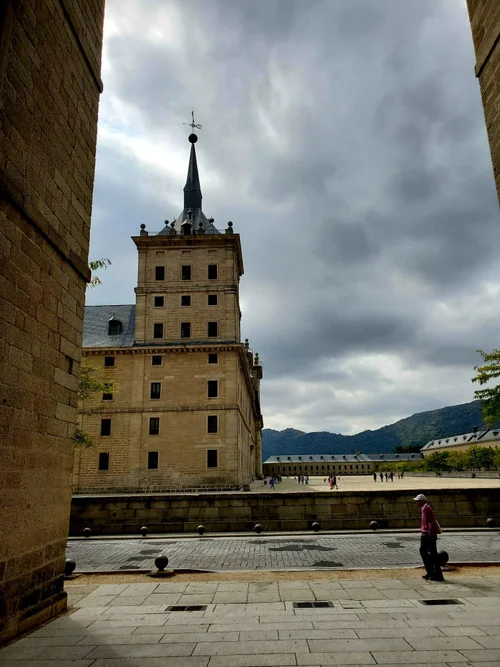
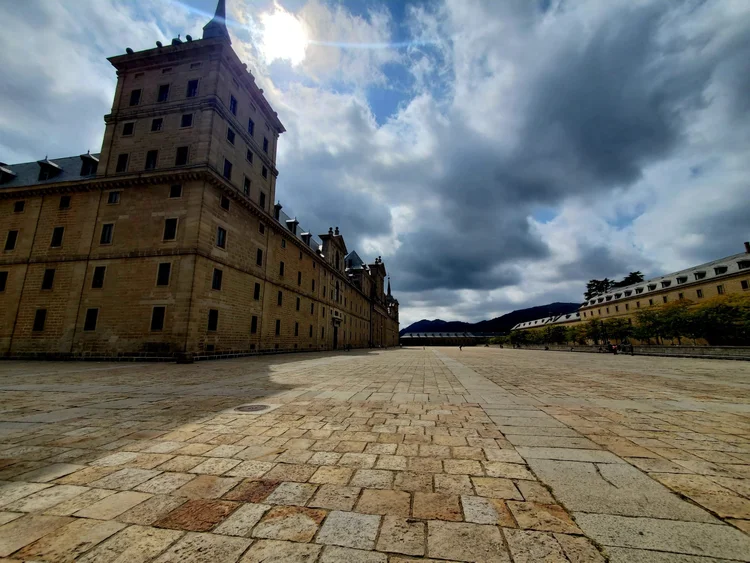
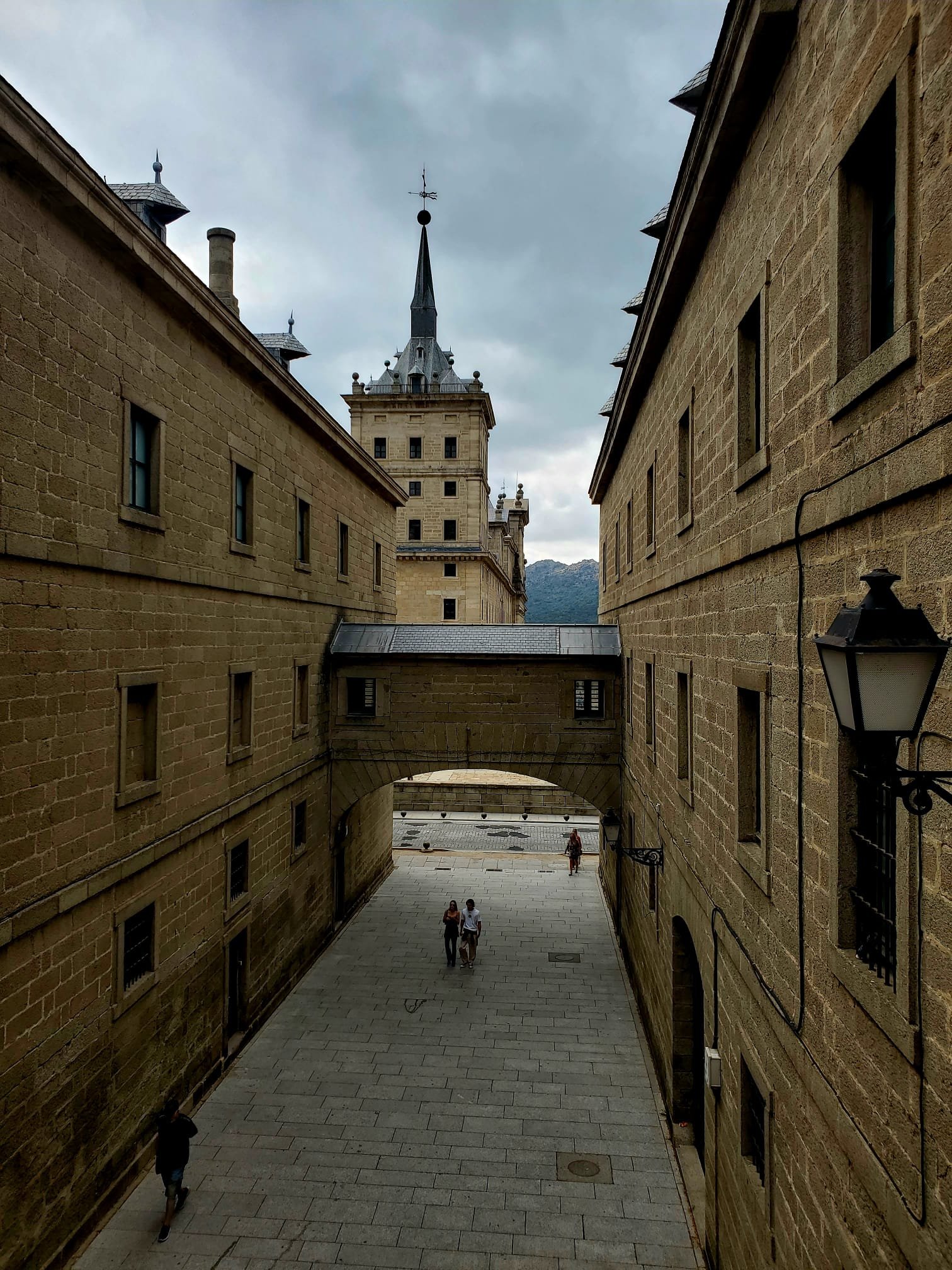
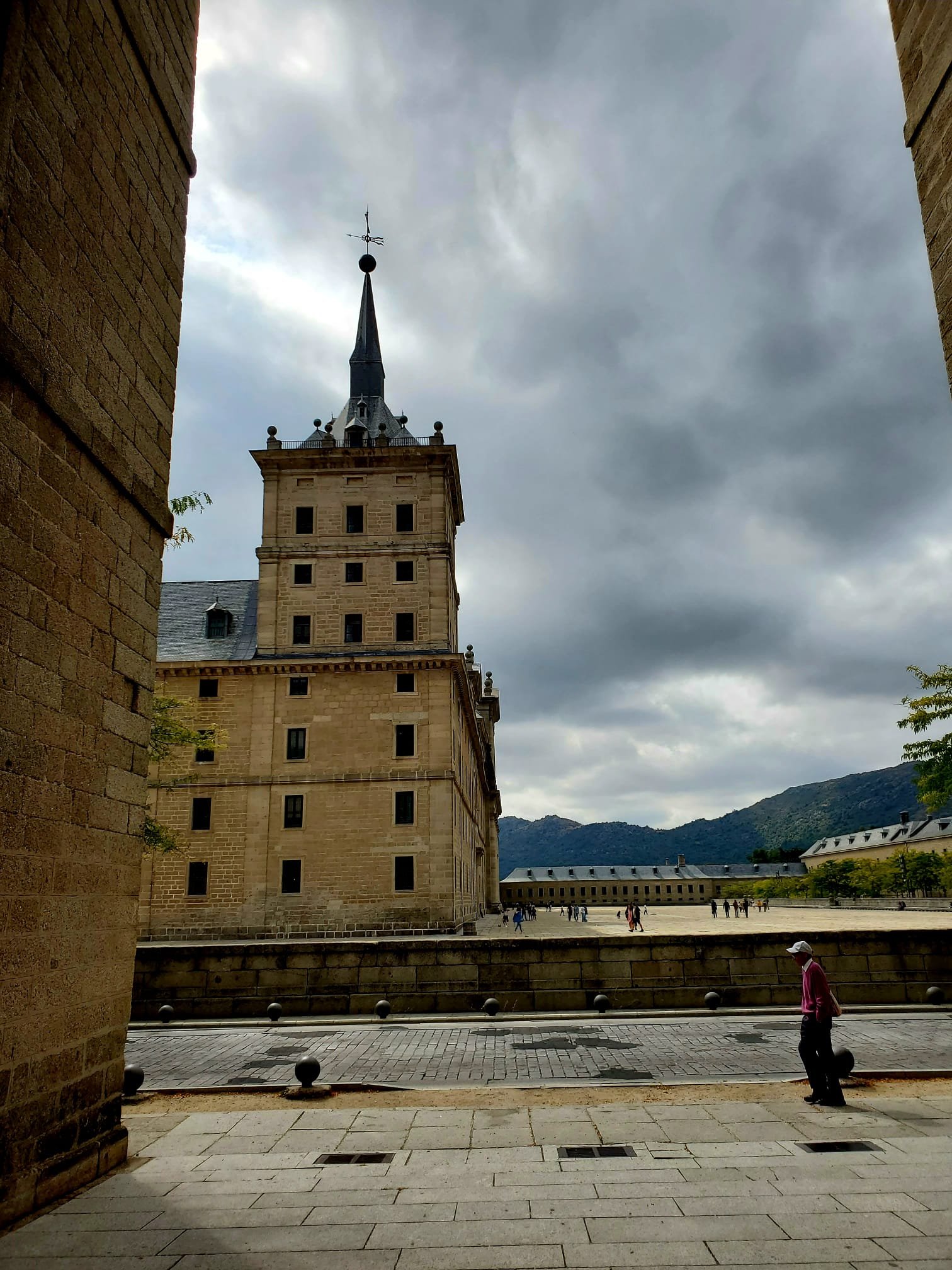
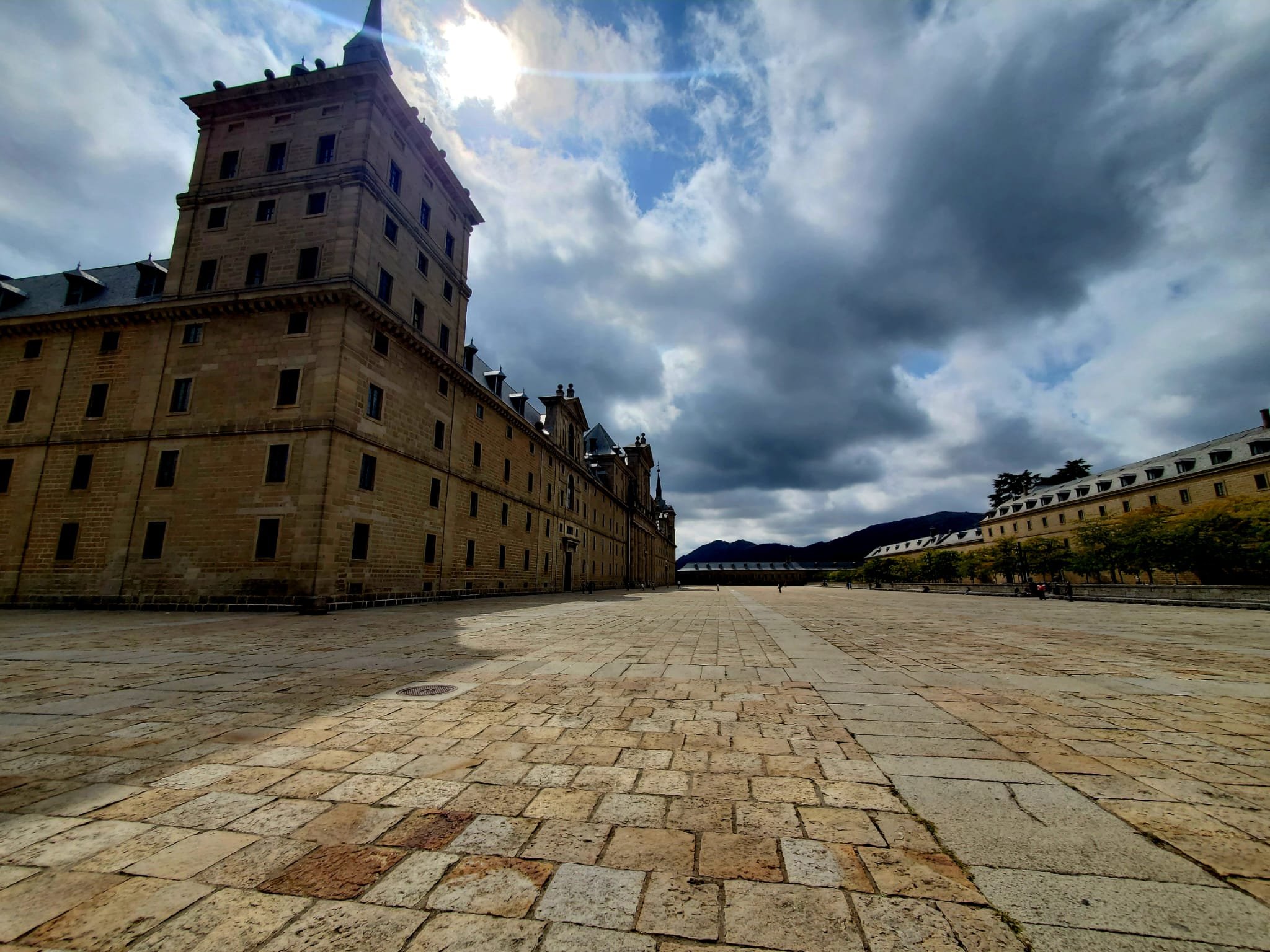
We decide to take a self-guided audio tour, and I’m super glad we do. The visit is so much richer when learning specific details and stories about this building from over 400 years ago.
Apparently, King Philip II built this as a mausoleum for his parents, the Holy Roman emperor Charles V and Isabella of Portugal, and he also wound up spending his last years there as he died of cancer.
The palace contains the Habsburg Apartments, including King Philip II’s preserved bedroom, and C and I both notice that this room, not to mention the bed itself, is extremely small and modest. The audio guide says something about wanting to atone in his dying years. He also has a small chapel in his bedroom.
The vaulted library contains over 4,700 manuscripts and 40,000 printed books, and has a Sistine Chapel-esque ceiling that gives me quite a sore neck from craning up to admire all the artwork.

You’re not allowed to take photos inside, so these two pictures are figments of your imagination:

The Gallery of Battles at the Royal Monastery of San Lorenzo de El Escorial

The Royal Pantheon at the Royal Monastery of San Lorenzo de El Escorial
The photo on the left is in the Gallery of Battles, which commemorates significant military campaigns of Philip II with frescoes of the battles on the walls. The photo on the right is in or near the Royal Pantheon, which is the burial site for Spanish monarchs (plus their children, and it catches my breath to see such small coffins).
After meandering through the monastery, royal tombs and library, I think that’s the end of the tour. But nope. There’s so much more in this huge building: This “parallelogram is constructed in granite, with a floor area of 207 x 161 meters, and a tower standing at each of its four corners. It has 15 cloisters, 16 courtyards, 1,200 doors, 300 monastic cells and 2,600 windows.”

The audio guide tells us where to go, so we walk down long, empty hallways, up and down narrow, stone stairways, through huge doorways and duck beneath weirdly short doorways. Occasionally we come across other people, particularly in the larger spaces (library, church/basilica), but most of the time it is just me and her.

Royal Monastery of San Lorenzo de El Escorial
It starts to rain hard, soon accompanied by booming thunder, and as we walk through the Palace of the Bourbons, which is like a very long, very luxurious living room that features a large collection of tapestries, I feel somehow like I’ve gone back in time. The mood – dark, echoey, cold, yet luxuriously decorated – is perfect for this deserted historical building, and I even look down, half expecting to see a floor-length ball gown on me.